
Yesterday, October 21, 2026, a joint webinar was held, organized by the European projects REFOLUTION, FUEL-UP, and NextFuel.
The event brought together researchers and industry representatives to discuss the latest innovations in the field of advanced biofuels and biomethanol, covering the entire value chain—from production to application and end-use in the maritime transport sector.
The webinar featured three technical presentations focused on recent research developments:
- Co-processing of bio-oils in refineries (REFOLUTION)
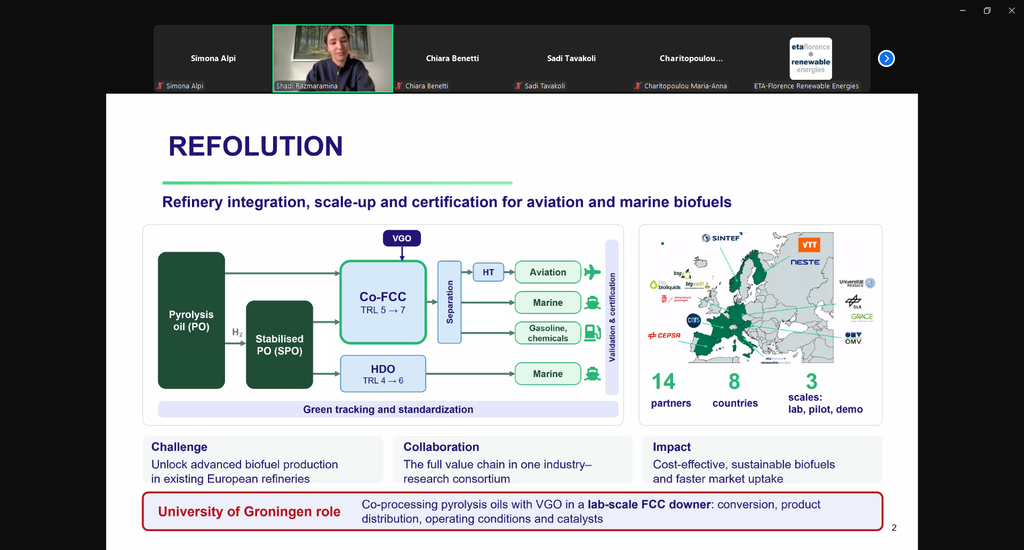
Shadi Razmaramina, a PhD candidate at the University of Groningen, presented a study conducted as part of the REFOLUTION project:
Continuous co-processing: Shadi demonstrated the technical feasibility of co-feeding stabilized pyrolysis oil (SPO) and vacuum gas oil (VGO) into a “downer” reactor for fluid catalytic cracking (FCC) at a laboratory scale.
Technical challenges addressed: Shadi discussed the solutions implemented to overcome issues such as the thermal instability of bio-oils, clogging of feed lines, and difficulties in product separation.
Integration into refineries: Shadi highlighted how integrating renewable feedstocks into existing European refineries accelerates the production of sustainable aviation fuels (SAF) and fuels for the maritime sector, while simultaneously reducing capital requirements.
Read Shadi’s full presentation: Here
- The Evolving Role of Biofuels in the Decarbonization of the Maritime Sector (FUEL-UP)
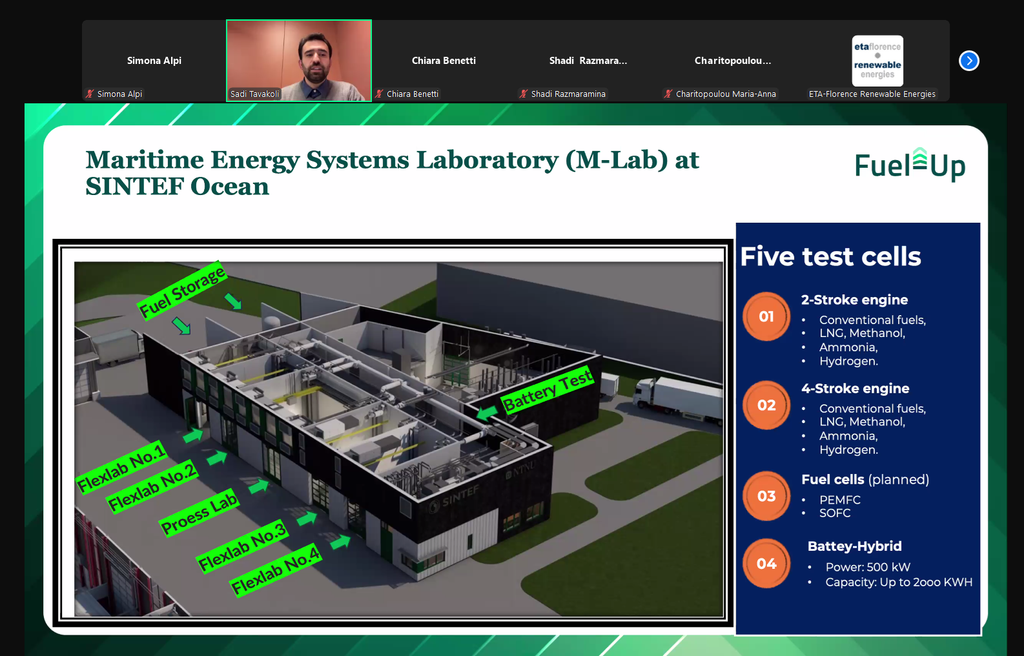
Sadi Tavakoli, a researcher at SINTEF Ocean, provided an overview of the FUEL-UP project:
Operational and Infrastructural Advantages: Sadi explained that biofuels represent one of the fastest pathways to reducing greenhouse gas emissions across the entire life cycle, thanks to their high compatibility with existing marine engines and current bunkering infrastructure.
Testing and Blends: Sadi presented ongoing tests at the Maritime Energy Systems Laboratory (M-Lab) involving blends based on HPO-Marine, bio-naphtha, and biomethanol.
Balancing Key Factors: Sadi emphasized that an optimal biofuel for the maritime sector must strike a balance between environmental performance, fuel quality, engine compatibility, and cost.
Read Sadi’s full presentation: Here
- Electrified Production of Biomethanol from Biogas (NEXTFUEL)
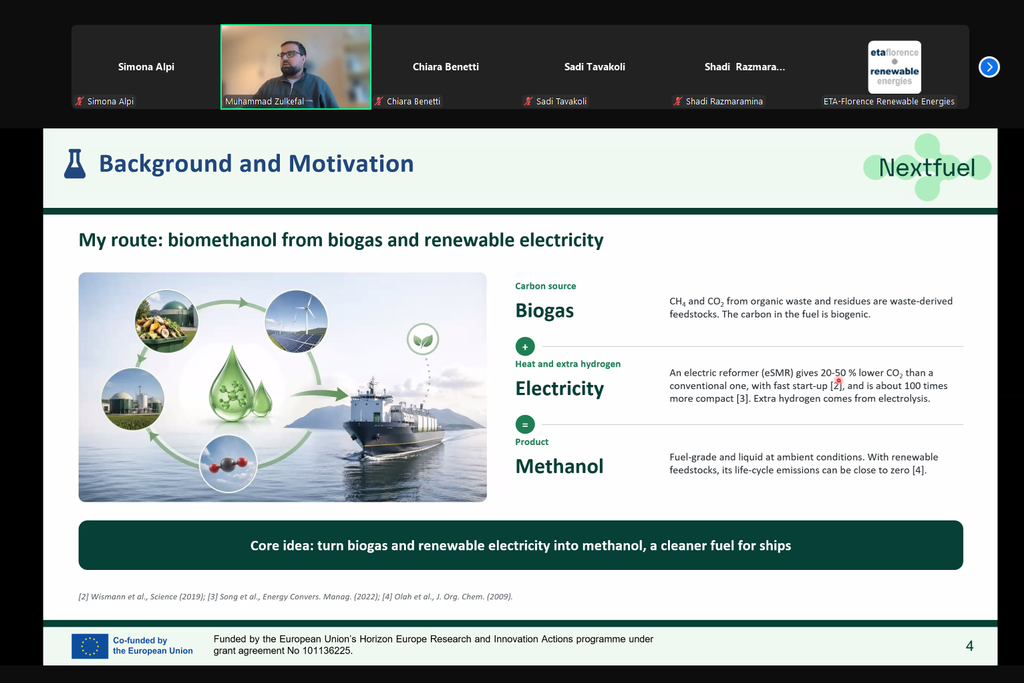
Muhammad Zulkefal, a PhD candidate at the Norwegian University of Science and Technology (NTNU), presented research findings from the NEXTFUEL project:
Production Process: Muhammad analyzed the electrified steam methane reforming (eSMR) process, which is designed to convert biogas and renewable electricity into fuel-grade biomethanol (with a purity of 99.85% by weight or higher). Process optimization: Muhammad presented the results of the optimization, which show a reduction of approximately 9% in total electricity consumption per tonne of methanol and a 5.8% increase in methanol production, while maintaining high carbon efficiency (around 93–96%).
Climate impact: Muhammad demonstrated that the use of clean electricity from renewable sources results in an extremely low carbon footprint—approximately 33 kg of CO₂ per tonne—based on the energy mix of the Norwegian grid.
Read Muhammad’s full presentation: Here
The full webinar registration will be available soon.